AI engineering for enterprise · Building since 20164 products · run on our own ops · 30+ enterprise clients
Document Intelligence

Most document-automation pilots die at 80% — not because the model was wrong, but because nothing was built past it.

"We do not sell you software we hope works. We sell you the software we depend on."

— Banao Technologies

The same pipeline — classification, validation, exception routing, integration — runs our own 300-person operation before it runs yours.


Book a Discovery Sprint → The first call is free · 45 minutes · no obligation
02 · What we build

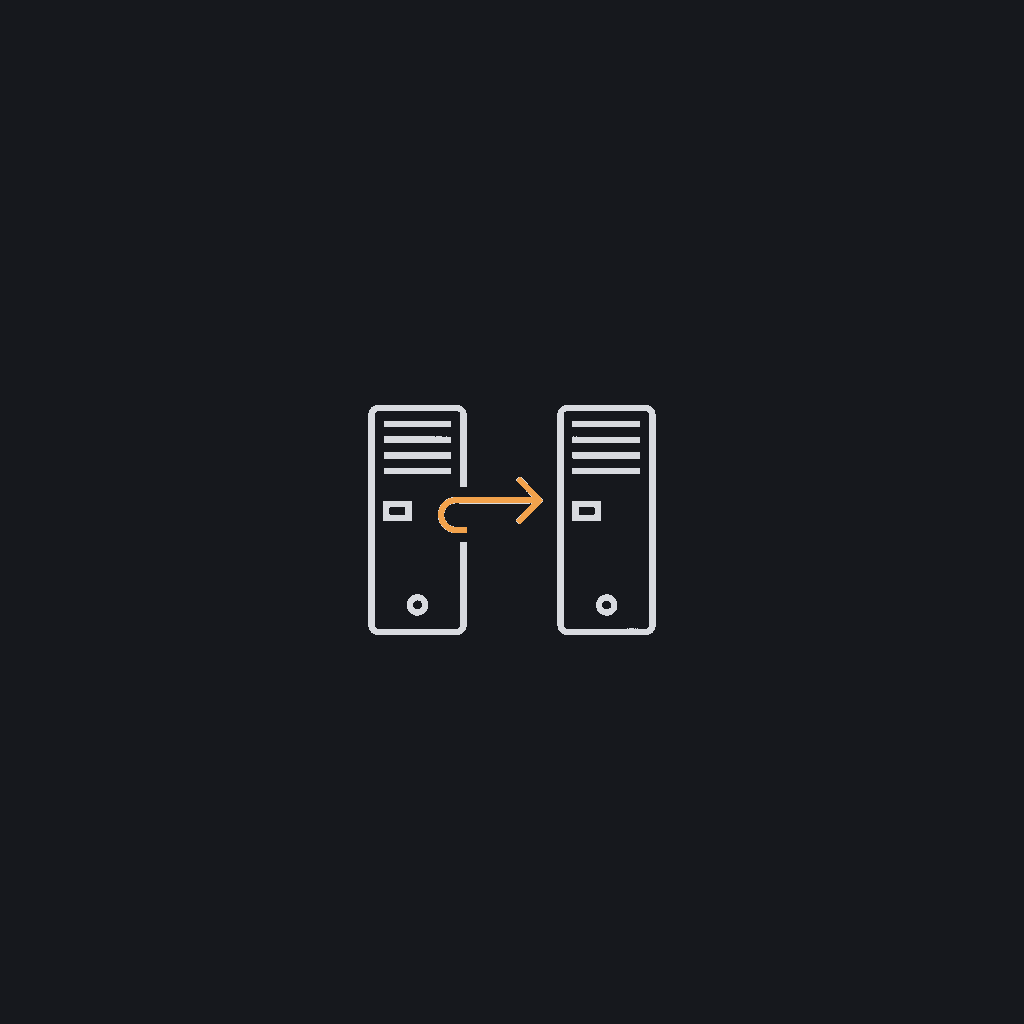
One pipeline, six stages. Never a single model call.

A demo that reads one clean invoice well is not a system. We build the full run — classification through integration — so a document goes in and a posted, validated result comes out the other side.
01
minimal line icon of a single document splitting into three labeled folder icons, classification concept

Classify

Every incoming file is sorted by type before extraction starts — an invoice is never read like a claims form.

02
minimal line icon of a magnifying glass over a scanned, slightly skewed paper page, extraction-from-messy-input concept

Extract

Structured data is pulled from real-world scans and photos, not just the clean samples a benchmark uses.
03
minimal line icon of two documents with a checkmark linking them, cross-checking-against-database concept

Validate

Every extracted field is checked against your systems of record, not just for internal consistency.

04
minimal line icon of a dial or gauge with a marked threshold line, confidence-scoring concept

Score confidence

A threshold tuned to your real cost of a missed error decides what clears automatically and what doesn't.
05
minimal line icon of a document branching into an inbox tray with a person silhouette, exception-routing concept

Route exceptions

Anything under the bar goes to a person, into a queue built for review — never a dead spreadsheet.

06
minimal line icon of an arrow feeding a document into a database cylinder, system-of-record integration concept

Integrate

The validated result posts into your system of record — closing the loop instead of sitting in an export file.


03 · How we build it

Most document pipelines die at eighty percent. Here's the difference.

What most pipelines do
  • Read the easy 80% well, then stall on everything else
  • Match brittle templates that break on the first format change
  • Report accuracy on the samples that were easy, not the ones that mattered
  • Leave uncertain cases with nowhere to go
minimal line icon of a document stack with a jagged crack through the middle, breakdown concept
What we build
  • Classifies first, so the messy 20% gets a path built for it
  • Extracts per document type, not off a fixed template
  • Validates against your systems of record before anything counts as done
  • Routes every uncertain case to a person, never a guess
minimal line icon of a document stack reinforced with a checkmark shield, resilience concept
04 · Why projects stall at 80%

Most pilots stop at 80% — this is where

Not because the model was wrong. Because nothing downstream of it was built to catch the fraction it couldn't clear — the smudged scan, the vendor who redesigned their invoice, the claim with an addendum stapled to page four.

The demo was real. The system around it wasn't.

Most pilots stop here — 80%
Classify Extract Validate Route Post
01

The 80/20 trap

The model clears the clean majority. The 20% that's the reason a person still does this job by hand never had a plan.

02

Brittle templates

Extraction tuned to a sample set holds until a vendor changes their invoice. Accuracy drops and nobody notices for a month.

03

Vanity accuracy

94% on a curated test set isn't 94% in production. What happens to the other 6%, and who's told, is the number that matters.

04

No home for exceptions

Flagged documents land in a shared inbox nobody owns. The manual work the pilot was meant to remove never left the building.

05 · From pile to straight-through

A pile of documents isn't the failure. A pile nobody posted anywhere is.

Before

The pile

Documents land, get read once by a model, and then sit in a spreadsheet or a shared inbox waiting for someone to re-key them into the system that actually matters.
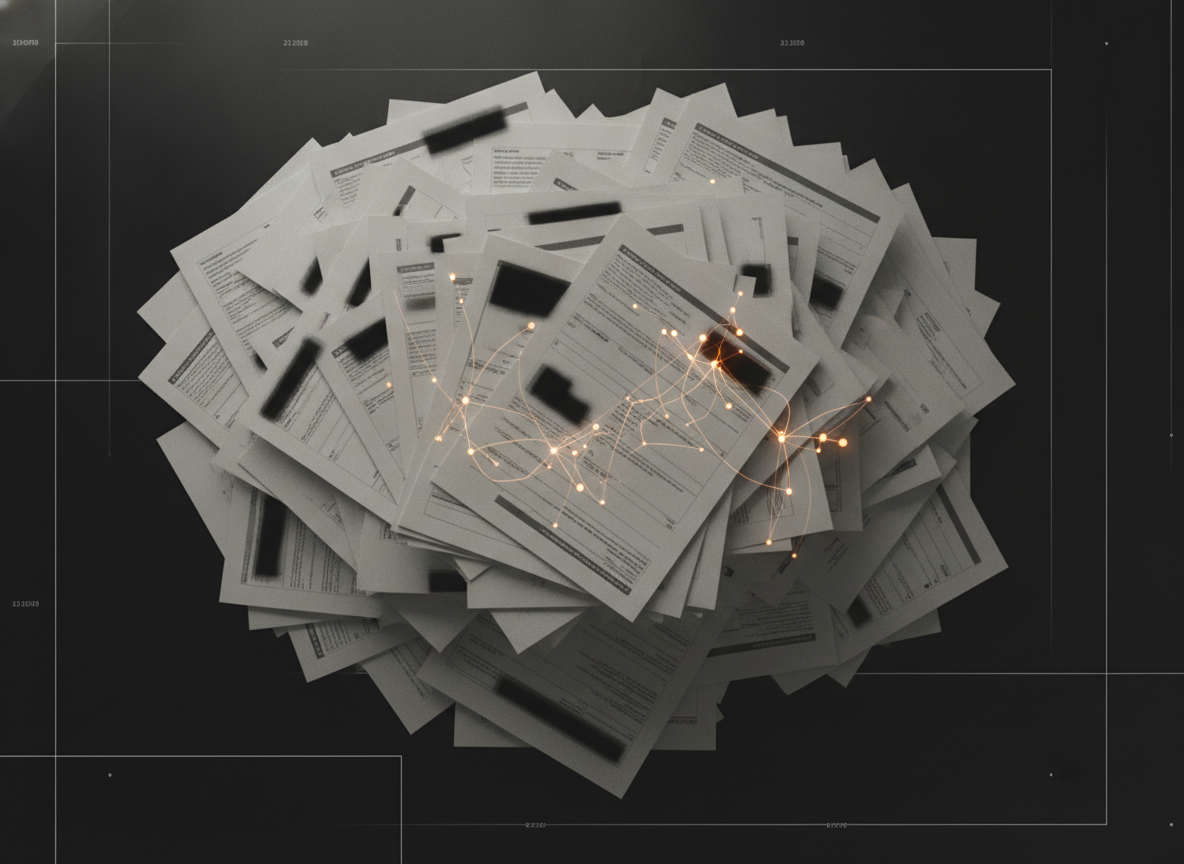
overhead photo of a disorganized stack of loose paper documents and claim forms on a desk, muted lighting, unresolved-work mood
With Banao

Straight-through

Classify, extract, validate against your own data, then post — directly into the system of record, above your confidence threshold, with a person only where the case actually needs one.


tiny line icon of a document with a checkmark, classify step
tiny line icon of a magnifying glass over text fields, extract step
tiny line icon of two documents being compared side by side, validate step
tiny line icon of an arrow entering a database cylinder, post step
06 · RECEIPTS

Three pilots that didn't stop at 80% — this is what finishing looks like

Not a demo reel. Three deployments that got past the part where most document-automation attempts die — the exception queue, the validation step, the integration that actually posts the result.

Metrics below are unpublished, pending client sign-off. Shown as pending — never invented.

minimal mono-line icon of a document flowing into a checkmark, loan-approval concept, no color fill
Digital lending
·· % PENDING

Loan-application packets are classified, validated against bureau data, and routed — the exception queue clears same-day instead of sitting in a shared inbox.

minimal mono-line icon of a shield with a document inside, claims-verification concept, no color fill
Insurance carrier
·· days PENDING

Claims packs are read against policy terms before a person ever opens the file — only the uncertain ones reach a reviewer.

minimal mono-line icon of a stack of invoices with a clock overlay, finance-ops concept, no color fill
Shared-services finance
·· hrs PENDING

Invoice and statement processing runs without a template rebuild every time a vendor changes their layout.

If your last attempt died somewhere in this list, that's the conversation worth having. Book a Discovery Sprint →

07 · Dogfooding

Three systems. Our own operation. No exceptions.

Before any of this ships to a client, it runs Banao — hiring, outreach, and upskilling for a ~300-person company.

InterviewGod

InterviewGodHiring

Runs hiring for the company that built it — including interviews for its own engineers.

Vikaas

VikaasOutreach

Runs Banao's own outreach — the same job it's built to do for clients.

Vidya

VidyaUpskilling

Keeps a 300-person team current on the tools they ship.

09 · The Honest Version

Five reasons we'll tell you this isn't the right fit — yet.

We run our own ~300-person operation on the systems we build. That only works if we're honest about what doesn't belong on the roadmap.

01
minimal line icon of a presentation slide with an X mark, concept: pilot-only mandate

You're validating an idea

If the next step is a proof of concept for a steering committee, start there. We build the system that follows it — not the deck.

02
minimal line icon of a person silhouette with a question mark, concept: no internal owner

No one will own it internally

You own the system when we leave — no lock-in. That only works if someone on your side is going to run it.

03
minimal line icon of a shopping cart or checkmark box, concept: off-the-shelf tool already sufficient

Off-the-shelf already clears the bar

If a subscription tool solves it, take it. We're built for the mid-to-large problems generic software doesn't reach.

04
minimal line icon of a clock with a fast-forward arrow, concept: unrealistic delivery window

You need it live tomorrow

Fast, for us, means weeks — real engineering shipped in weeks, not quarters. Not overnight.
05
minimal line icon of an empty document tray, concept: no real workflow to build on

There's no real workflow yet

We build on your actual documents and process — not a benchmark. If that doesn't exist yet, we're early for you.

10 · How we start

The same pipeline we run our own operation on

Three stages, no skipped steps — classify, build, and run in production, the discipline we hold our own ~300-person operation to.

engagement — sequence
01
AI Discovery Sprint Prototype run against your own sample documents. Scope and fixed-price quote produced from what the pipeline actually does, not a guess. minimal line icon of a terminal prompt cursor beside a document outline, single stroke, scoping concept
02
Build and integrate Classification, extraction, validation, confidence thresholds and routing built as one pipeline, connected to your systems of record. minimal line icon of two server racks linked by a directional arrow, single stroke, integration concept
03
Production and continuous improvement Live, monitored, and retuned as your document mix changes. You own the system — no lock-in. minimal line icon of a monitor showing an ascending step chart, single stroke, ongoing-tuning concept
GET STARTED

For the documents you cannot afford to get wrong.

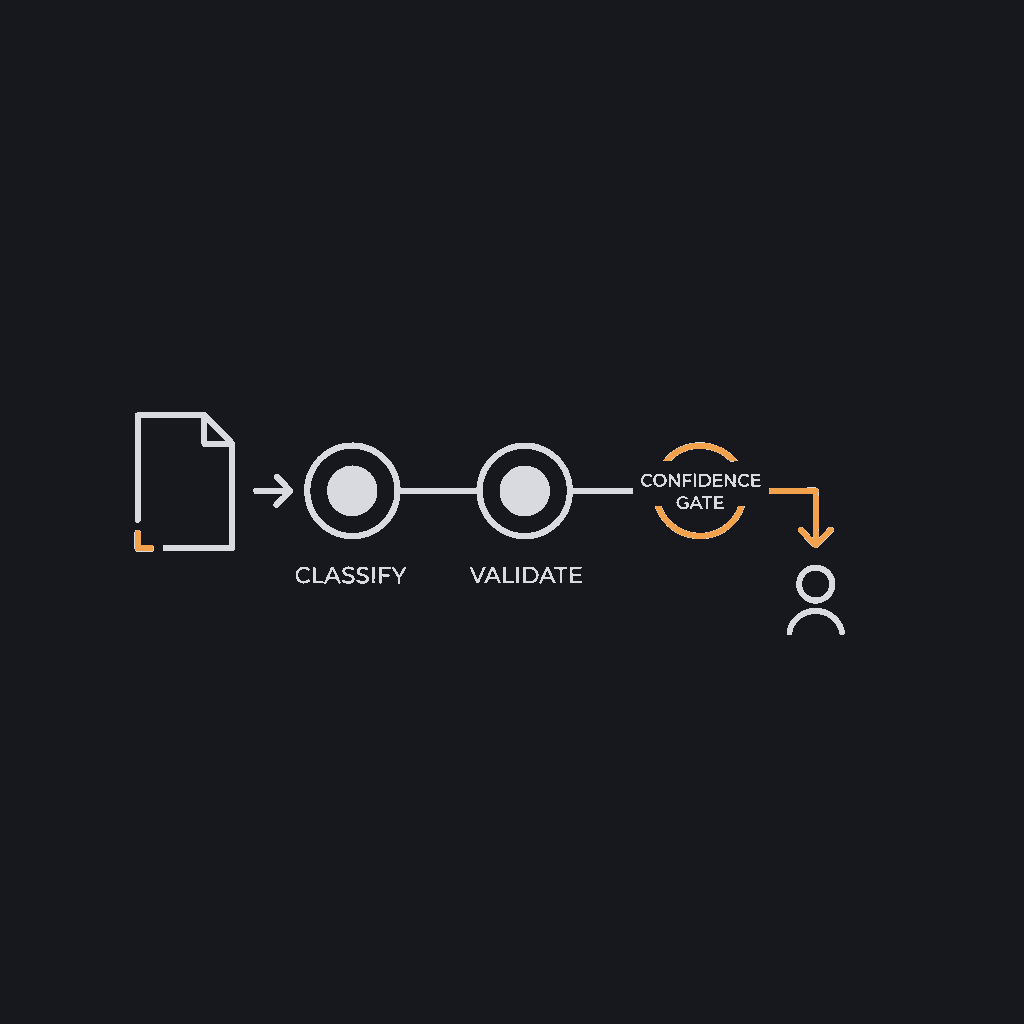
Every uncertain case routes to a person, never a guess. Bring the document your compliance team worries about most — KYC files, claims packs, financial statements — and we'll show you where the confidence threshold sits.

Book a Discovery Sprint →
Built for regulated data
  • UAE PDPL
  • Saudi SDAIA
  • US SOC 2
  • UK GDPR
  • India DPDP